The “Esmeraldas interception”: how Drake actually took the Cacafuego off Cabo San Francisco (1579)
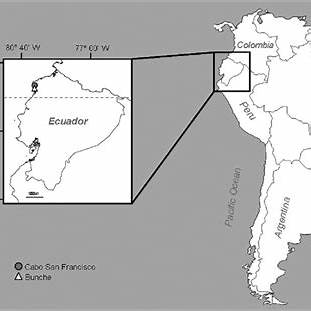
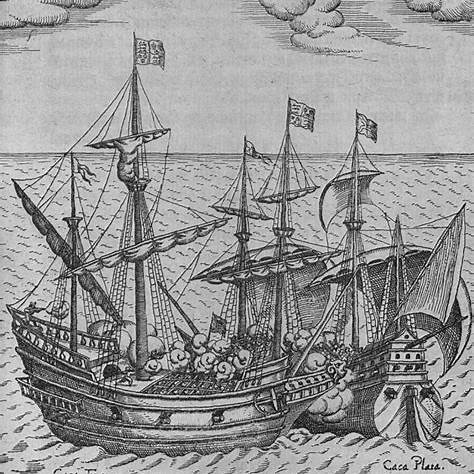
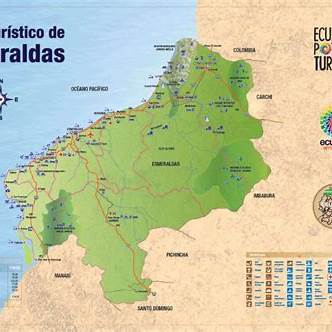
When people say “the Esmeraldas interception,” they’re usually talking about the moment Francis Drake’s ship (Golden Hind) finally caught and seized the Spanish treasure ship Nuestra Señora de la Concepción—nicknamed the Cacafuego—near Cape/Cabo San Francisco, on the coast of today’s Esmeraldas Province. Internet Archive+2The Library of Congress+2
1) Why the prize was off Esmeraldas at all
The Cacafuego wasn’t wandering—she was moving treasure north along the Pacific side of Spain’s empire. From Callao (Lima’s port), Drake learned a treasure ship had sailed for Panama, and he went into a hard pursuit. The Library of Congress summary is blunt about the setup: from Callao he “obtained news” of the treasure ship and “overtook the ship on March 1.” The Library of Congress
That northbound corridor hugs the coast past what’s now southern Ecuador and Esmeraldas, because it’s the natural sea-lane for moving cargo and bullion toward transshipment points further north.
2) Pinning the place: Cape San Francisco = modern Esmeraldas coastline
The best “anchor” detail in the period narrative is the place name itself. A contemporary-style account preserved in The World Encompassed says plainly:
“The place where we tooke this prize, was called Cape de San Francisco…” Internet Archive
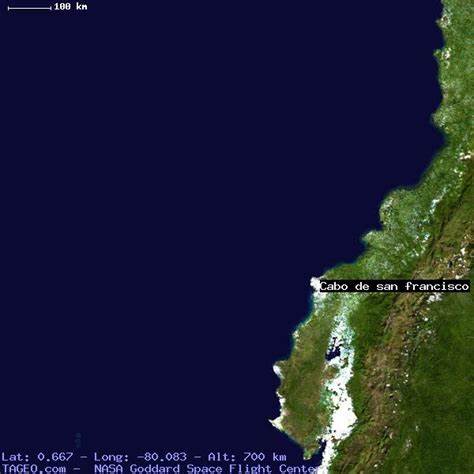
Today, Cabo de San Francisco is a cape in Esmeraldas Province (near Muisne) with coordinates around 0.649° N, 80.083° W. Mindat
It’s also the name carried in modern protected-area geography nearby (e.g., the Reserva Marina Galera–San Francisco in Esmeraldas). Wikipedia
So the “Esmeraldas interception” isn’t a fuzzy legend—it maps to a real, named headland on Ecuador’s north coast.
3) The interception itself: sighting, reward, approach
In the chase narrative, Drake makes a promise that feels like pure shipboard psychology: whoever spots the treasure ship first gets a gold chain. The account records:
“…whosoeuer could first descrie her, should haue his chaine of gold…” Internet Archive
And it credits John Drake (a relative/crewman) with the critical sighting from aloft. Internet Archive+1
The same source gives a tight sequence: sighted about mid-afternoon, boarded in the early evening (the time phrasing varies slightly across the appended extracts), but the pattern is clear—spot → close → board. Internet Archive+1
4) The fighting was brief—and technical
The most vivid “I was there” detail is not a heroic speech; it’s a matter-of-fact gunnery note:
“…we shotte at her three peeces of ordnance, and strake downe her misen…” Internet Archive
That’s the interception in a single line. Knocking down the mizzen (aft mast) is a classic way to cripple maneuvering and make boarding inevitable. It suggests Drake wanted the ship stopped fast, with minimal prolonged exchange.
5) What they found on board (and why it mattered)
Once aboard, the same account lists the haul in a way that reads like stunned bookkeeping:
“…thirteene chests… four score pound weight of golde, and sixe and twentie tunne of siluer.” Internet Archive
Whether every number is perfectly measured or rounded in retelling, the scale is undeniable: this was Drake’s most profitable capture in the Pacific phase of the voyage—exactly how modern institutional summaries describe it. The Library of Congress
6) The Esmeraldas “human moment”: the Spanish pilot’s joke
One reason this episode sticks is that it includes a rare scrap of dialogue—taunting, resigned, almost comedic—between captors and captured. The account names the ship’s pilot Don Francisco, and preserves a moment after Drake has stripped the ship:
“Captaine, our ship shalbe called no more the Cacafoga but the Cacaplata…” Internet Archive
The men “laughed hartely,” the text says, and then the Spaniards are released. Internet Archive
That’s an important “tone” detail: this was violence and plunder, yes—but also calculated control. Drake wanted treasure, not a drawn-out bloodbath that might slow him down or rally pursuit.
7) So why call it an “interception”?
Because Drake didn’t stumble onto the prize—he hunted it:
- He got intelligence at Callao and went after a specific ship. The Library of Congress
- He pushed north until the contact point near Cape San Francisco. Internet Archive+1
- He used a short disabling fire and boarding to end it quickly. Internet Archive
In modern terms: this was targeted maritime interdiction—early-modern style.
8) What you can look for on today’s map (if you visit or plot it)
If you drop a pin at Cabo San Francisco (Esmeraldas), imagine two ships off the headland:
- The Spanish ship trying to keep her sea-room and schedule northward.
- Drake’s Golden Hind closing from astern/quarter, wanting to look harmless until the last moment (a tactic echoed in later summaries, though the clearest “hard” detail remains the cannon/mizzen line). Internet Archive+1