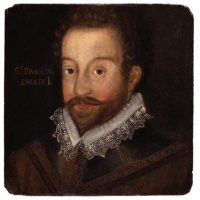
Today’s Explainer: Piracy on Ecuador’s Coast — From Drake to Guayaquil
Night on the Guayas River is the wrong kind of quiet: black water, mangrove shadows, and the sense that the city is there—but hidden inland, beyond bends you can’t see. In 1709, when the English privateer Woodes Rogers finally turned away from Guayaquil, he didn’t slip out like a thief. He left with noise and theatre: “drums beating, trumpets sounding, and guns booming”—a floating announcement that the raid was over and the river had, for a moment, belonged to outsiders. (The Ted K Archive)
That sound is a good doorway into the story, because piracy on Ecuador’s coast wasn’t just about “pirates = treasure.” It was about geography, war, trade routes, and one crucial fact: Guayaquil was a shipyard city and a gateway—not on the open sea, but reachable by those who could navigate the coast and river mouths. And once raiders learned the rhythm of winds, tides, and settlements—Puná, Santa Elena, Manta, Isla de la Plata—Ecuador’s shoreline became a recurring chapter in the wider struggle for Spain’s Pacific empire. (oxfordre.com)
Why this coast attracted raiders
Think of the coastline as a working frontier in the 1500s–1700s:
- The Pacific was Spain’s “backyard,” but it was huge and hard to patrol.
- The coast offered anchor points for water, repairs, and intelligence—especially around Cape San Lorenzo / Cabo San Lorenzo, Santa Elena, and the approaches to the Gulf of Guayaquil.
- Guayaquil mattered because it built and repaired ships, and because goods (and people) moved through it.
This is why raids repeated: not because pirates had a magical map to gold, but because once a sea-lane becomes understood, it becomes usable—by merchants, navies, and criminals alike.
Drake: the legend that “named” the island
The most famous name attached to Ecuador’s pirate mythology is Sir Francis Drake, known in Spanish memory as “El Draque.” (Nature Portfolio Group)
Drake’s Pacific campaign (late 1570s) turned him into a symbol: to English supporters, a daring privateer; to Spain, a humiliating threat.
And Ecuador’s coast absorbed the myth. Writing later, buccaneer-navigator William Dampier recorded a local explanation for Isla de la Plata: it was, “as some report,” named after Drake captured the Cacafuego (a ship laden with silver) and “divided it here.” (gutenberg.net.au)
That single line shows how pirate history works: fact and rumor fuse into place-names and “everybody knows” stories.
Just as importantly, Dampier’s description tells you why islands like this mattered operationally. Water could decide everything. On Isla de la Plata, he notes “There is no water on this island… [it] drills slowly down from the rocks,” and must be collected carefully. (gutenberg.net.au)
For raiders, fresh water wasn’t a convenience—it was strategy.
Cavendish: Puná, the chokepoint that guards Guayaquil
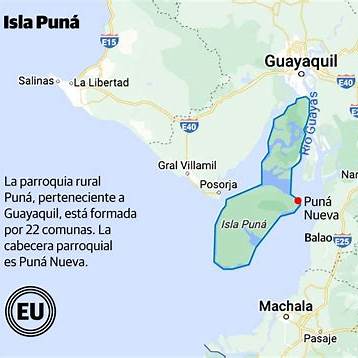
If you want one piece of geography that keeps recurring, it’s Puná Island. It sits at the mouth of the Gulf of Guayaquil, like a latch on a door.
In 1587, the English circumnavigator Thomas Cavendish came through this theater. Accounts preserved in later histories quote the blunt outcome at Puná: “we burned some 150 of their houses…” (darwin-online.org.uk)
That line is shocking—and it should be. It reminds us that “piracy” in this era often meant terror as a tool, used to punish resistance, force pilots to cooperate, or simply demonstrate dominance.
Puná also appears as a practical stop. Dampier later described the town’s architecture as houses raised on posts “10 or 12 foot high” with ladders—details that read like travel writing, but also tell you why coastal settlements were vulnerable: they were visible, flammable, and exposed. (darwin-online.org.uk)
The buccaneer pipeline: from Panama jungle to Ecuador’s sea-lane
By the late 1600s, piracy on this coast wasn’t only “ships at sea.” Many buccaneers reached the Pacific by an exhausting route: crossing the Isthmus of Darién (Panama) with Indigenous guides, stolen canoes, and brutal attrition. First-hand narratives describe heat, hunger, and panic—not glamorous at all. (This is part of why pirate crews were volatile: they were often half-starved, sick, and deeply split over risk.)
Once afloat in the Pacific, the Ecuadorian coast offered what crews needed:
- quiet coves to careen hulls and patch leaks
- places to seize provisions
- and, above all, intelligence: which ports were rich, guarded, or already warned
Dampier’s own log puts Ecuador’s coastal nodes in motion—Isla de la Plata, Point Santa Elena, Manta—as stepping stones in a larger campaign. (gutenberg.net.au)
Guayaquil: the prize that sits inland
Here’s the twist that made Guayaquil both safer and still vulnerable: it’s not a beach city. To reach it, raiders had to commit to river navigation—entering an environment where tides, currents, sandbars, and local pilots could make or break a raid.
That didn’t stop them.
- 1687 saw one of the most famous attacks on Guayaquil in the buccaneer era, remembered across Spanish and Ecuadorian histories as a major shock to the city and region. (enciclopediadelecuador.com)
- 1709, Rogers returned to the theme—his departure described with deliberate spectacle: drums, trumpets, guns. (The Ted K Archive)
What did raiders want here?
- money and goods (ransom, stores, trade goods)
- leverage (prisoners, pilots, and intimidation that ripples outward)
- repair capacity (Guayaquil’s maritime importance wasn’t a secret)
But it’s crucial not to romanticize: raids meant captivity, violence, destroyed homes, and economic trauma. The “pirate story” is exciting as narrative; it was horrifying as lived experience.
Timeline: the Ecuador coast in the pirate era (fast, useful version)
- 1570s–1580s: Drake becomes “El Draque” in Spanish memory; stories attach to the coast and Isla de la Plata. (Nature Portfolio Group)
- 1587: Cavendish attacks at Puná, with accounts recalling mass burning. (darwin-online.org.uk)
- 1680s: Buccaneer expeditions normalize the “pipeline” into the Pacific and use Ecuador’s coastal nodes. (gutenberg.net.au)
- 1687: Major raid on Guayaquil enters regional historical memory. (enciclopediadelecuador.com)
- 1709: Woodes Rogers raids and departs Guayaquil with public ceremony. (The Ted K Archive)
Myth vs Fact
Myth: “Pirates came only for buried treasure.”
Fact: They came for water, repairs, pilots, provisions, ransom, and political leverage—treasure was only one part of the equation. (gutenberg.net.au)
Myth: “Isla de la Plata is proven Drake’s silver-dividing spot.”
Fact: Even Dampier frames it as “as some report”—a powerful tradition, not courtroom-proof. (gutenberg.net.au)
Myth: “Pirates were always outside the law.”
Fact: Many operated as privateers during wartime—still brutal in practice, but sometimes backed (or later excused) by states. (oxfordre.com)
Why this history still echoes (and why Ecuador’s coast keeps the stories)
Because the coastline is a memory machine. Place-names, islands, and river mouths preserve old stories better than archives do. A sailor can still look at Puná and understand it as a gate. A visitor to Isla de la Plata can still feel how water scarcity shapes behavior. (gutenberg.net.au)
And the bigger lesson is timeless: when trade concentrates value—and geography concentrates movement—someone will try to take a shortcut by force.
Mini resumen en español (breve)
En los siglos XVI–XVIII, la costa del actual Ecuador fue un corredor estratégico para corsarios y bucaneros, no solo por “tesoros”, sino por agua, provisiones, pilotos, reparación de barcos y la oportunidad de obtener rescates. La figura de Francis Drake (“El Draque”) quedó ligada a leyendas como la de Isla de la Plata, donde “según se decía” habría repartido plata. (Nature Portfolio Group)
Lugares como Puná (puerta del golfo de Guayaquil) aparecen una y otra vez en relatos de ataques y control de rutas; y Guayaquil, aunque está tierra adentro por el río, sufrió incursiones memorables (como la de 1687) y la de 1709 relatada por Rogers. (enciclopediadelecuador.com)