Introduction
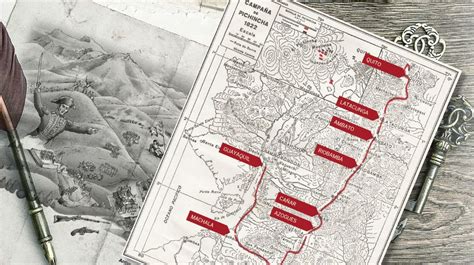
Independence-era war in Ecuador isn’t best understood as “armies clash, someone wins.” It’s better understood as: Can you move people, food, animals, and gunpowder across extreme geography without your force collapsing? The Coast is humidity, rivers, and corridors. The Sierra is altitude, cold nights, narrow passes, and trails that can vanish in rain. Whoever learns to survive movement ends up shaping politics.
1) Why geography decides strategy
Coast corridors vs Andes corridors
- From Guayaquil inland, you’re not marching on a flat map. You’re threading through river routes, floodplains, and choke points, then climbing into mountain systems that punish the body.
- In the Andes, the enemy isn’t only the other army—it’s thin air, mud, and time. A day of delay means supplies run short, morale drops, and disease spreads.
Geography creates “forced choices”
Commanders repeatedly face harsh tradeoffs:
- Go fast, arrive weaker (exhausted, sick, hungry).
- Go slow, arrive stronger—but give the enemy time to regroup, recruit, or block passes.
2) War as travel, hunger, information, endurance
Supply isn’t a detail — it is the campaign
An army is basically a moving stomach and a moving toolbox:
- Food (maize, beans, meat when possible)
- Salt (for food and survival)
- Shoes / cloth / blankets (feet and cold decide who can walk tomorrow)
- Ammunition + powder (and dry storage to keep it usable)
- Medical basics (even simple bandaging and hydration matters)
If any one of those collapses, the unit doesn’t just “fight worse”—it stops moving, and then it becomes vulnerable.
The information war is literal
No radios. No live updates. Information travels by:
- messengers on horseback
- runners
- people on mule trains
- river traffic
And rumor moves even faster. A false report (“the enemy is 2 days away”) can empty a town, hide supplies, or cause panic that changes the outcome before a shot is fired.
3) Who were the soldiers — mercenaries?
The honest answer
Mostly not mercenaries in the “hired guns with no attachment” sense.
What you really had was a mixed force, often stitched together:
- Local recruits / militias
- People pulled from towns and rural areas, sometimes with minimal training.
- Regular troops from larger independence armies
- More disciplined units, clearer command structure.
- Allied contingents
- Forces cooperating for shared strategic goals.
- Foreign volunteers
- A smaller but famous element: outsiders (often veterans) who joined for a mix of ideology, opportunity, adventure, and sometimes promised pay/benefits.
So: some were paid, yes. But “paid” doesn’t automatically mean “mercenary.” A lot of soldiers were tied to region, survival, or obligation—and many had no easy choice.
4) Military Angle II — How you actually move an army up the Andes
This is the “how it works” part—the stuff that decides outcomes even more than speeches.
Step 1: Break the army into a travel system
You don’t move as one blob. You move as a column:
- Vanguard (front): scouts and the first fighters
- Main body: bulk of soldiers
- Supply train: mules, carts where possible, porters
- Rear guard: protects the supply train and prevents surprise attacks
If the supply train gets hit or lost, your campaign collapses within days.
Step 2: Use animals and people differently
- Mules are the heroes of mountain logistics: steady, strong, and better on steep trails than horses.
- Horses are useful for riders and some combat needs, but they’re harder to feed and manage at altitude.
- Porters (people carrying loads) often become essential where carts can’t go.
Step 3: Plan around altitude like it’s weather
Altitude isn’t “just thinner air.” It changes everything:
- stamina drops
- dehydration hits faster
- sleep can be poor
- headaches and nausea weaken units
Smart commanders try to stage acclimatization:
- climb in phases
- rest at key elevations
- avoid forcing exhausted troops into a major fight immediately after a brutal ascent
Step 4: Build “food math” into every decision
A commander is always doing invisible calculations:
- “How many days of food do we have?”
- “How many animals can we feed on this route?”
- “Which towns can supply us—and what happens if they can’t?”
- “Do we requisition supplies (risking resentment) or pay (risking bankruptcy)?”
This is where civilians feel the war most sharply.
Step 5: Expect weather to destroy the schedule
In the Andes:
- rain turns trails into slides
- rivers swell and block crossings
- fog hides movement and causes units to get separated
A single broken bridge or washed-out path can force:
- a detour (days lost)
- supply spoilage
- sickness spikes
- morale collapse
Step 6: Manage disease like an enemy force
Disease doesn’t wait for battle day.
- Coast zones: heat, humidity, contaminated water → stomach illness, fevers
- Highlands: cold nights + exhaustion → respiratory illness, weakness
When soldiers are weakened, discipline breaks: straggling, desertion, looting—then the army becomes dangerous to everyone around it.
Step 7: Keep civilians from becoming enemies
If an army takes food without restraint, it creates:
- hidden supplies
- false directions
- local resistance
- sabotage
So the “best” logistics isn’t only about taking supplies—it’s about keeping communities just cooperative enough that movement remains possible.
5) What soldiers and civilians experienced (the human layer)
Soldiers
- Feet matter more than bravery: blisters, wet socks, torn sandals—these decide who can march.
- Cold nights + hunger make people irritable and impulsive.
- Fear of the unknown route is constant: not knowing if the next pass is safe or if your unit will be isolated.
Civilians
- Towns and villages become pressure points:
- sudden demand for food and animals
- anxiety about whose army arrives next
- accusations of “helping the enemy”
- Travel becomes risky:
- checkpoints
- confiscations
- rumors that change behavior overnight
This is why “revolution” can feel like a permanent emergency to ordinary people.
Why it mattered
Once you see the war as movement + supply, Guayaquil’s political story makes even more sense:
- The port isn’t just a city; it’s a logistics engine.
- The Sierra isn’t just a destination; it’s a terrain filter that destroys weak plans.
- The side that can reliably move and supply forces across the Andes gets to decide the terms of the new state.
Myths vs Reality
Myth: “Battles decide history.”
Reality: Logistics decides which battles even happen—and who arrives able to fight.
Myth: “They were all mercenaries.”
Reality: Most were locals and regional allies; foreign volunteers existed but weren’t “the whole army.”
Myth: “Winning Quito is just marching there.”
Reality: It’s weeks of food math, weather, altitude, shoes, and information control.
English summary (6 sentences)
The independence campaigns were won as much by roads and logistics as by combat. Coastal corridors could feed and organize forces, but the Andes punished movement with altitude, cold nights, mud, and narrow passes. Armies functioned as traveling systems: scouts, main body, supply train, and rear guard—because losing supplies could end a campaign in days. “Who were the soldiers?” Mostly locals, allied regional troops, and some foreign volunteers—paid sometimes, but not mainly mercenary bands. Civilians experienced the war through requisitions, checkpoints, rumors, and uncertainty about which authority would punish them next. In this era, war was endurance: travel, hunger, information, and survival.
Resumen en español (6 oraciones)
Las campañas de independencia se definieron tanto por caminos y logística como por combates. Los corredores de la Costa podían alimentar y organizar tropas, pero la Sierra castigaba el movimiento con altura, frío, barro y pasos estrechos. Los ejércitos se movían como sistemas: exploradores, cuerpo principal, tren de abastecimiento y retaguardia, porque perder suministros podía terminar una campaña en pocos días. ¿Quiénes eran los soldados? Mayormente reclutas locales, aliados regionales y algunos voluntarios extranjeros—con pago en ciertos casos, pero no como “bandas mercenarias” dominantes. Los civiles vivían la guerra en requisiciones, controles, rumores y el miedo a la autoridad cambiante. En esta época, la guerra fue resistencia: viaje, hambre, información y supervivencia.