Introduction
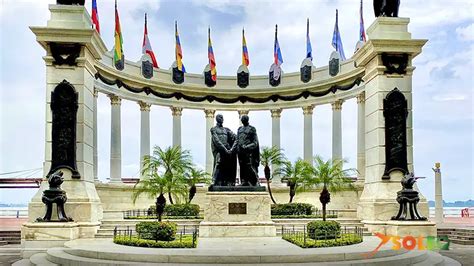
If Quito’s revolution years felt like living inside uncertainty, Guayaquil in October 1820 feels like the opposite: a plan that actually lands. Not because everyone suddenly agreed—but because Guayaquil had three ingredients that matter in real-world revolutions: money (a port economy), organization (networks + timing), and control of the garrison before the city could be locked down. (El Universo)
What happened (the turning-point sequence)
1) A “social” gathering that was also a plan
In the days before 9 October 1820, conspirators used normal elite social life as cover. The best-known story is the meeting remembered as the “Fragua de Vulcano”—a private gathering tied to the Villamil–Garaycoa circle that helped coordinate who would do what when the moment came. El Universo’s special explains how that house and the Cabildo became key points in the October story. (El Universo)
2) The night move: take the levers first
The core tactic was simple (and very “port-city practical”): take the barracks/command points fast, and do it with enough insiders that the city wakes up to a new reality rather than a long street battle. Several summaries—including the Guayaquil municipal history note—emphasize the revolution as largely bloodless compared to what people might expect. (Alcaldía de Guayaquil –)
3) Morning legitimacy: a Junta with names people recognized
On 9 October, leadership becomes public: José Joaquín de Olmedo is presented as political head, and Gregorio Escobedo as military head of the new governing Junta (in the framing used by the municipal account). (Alcaldía de Guayaquil –)
That “named authority” matters: it signals to merchants, ship captains, guilds, and neighborhoods that this isn’t just a riot—it’s a government. (El Universo)
Why it succeeded (the “why this one stuck” checklist)
1) Port money = options
A port city has financial oxygen: customs, shipping, credit networks, and merchant coordination. That doesn’t guarantee victory—but it makes it easier to pay, supply, and organize quickly (and to keep the city functioning so people don’t turn against the change instantly). Historians of Guayaquil’s urban development highlight how export activity (notably cacao) and maritime industry shaped the city’s economy in the late colonial period. (JSTOR)
2) Organization + “quiet alliances”
Guayaquil’s movement wasn’t only local notables; it also involved experienced military figures (including officers associated with wider independence networks). Even sources that disagree on details generally converge on a core point: planning was designed to be fast, coordinated, and to reduce chaos. (El Universo)
3) Control the garrison, then the story
Revolutions often fail when loyalist forces regroup and retake the city. Guayaquil’s advantage was the early capture/neutralization of key military levers, which made the first 24 hours feel decisive rather than tentative. (That “first day feeling” is a big psychological win.) (El Universo)
4) It didn’t stop at the city
This is the “stuck” part: Guayaquil didn’t just declare and hope. The new leadership looked outward—supporting a campaign to secure the rest of the territory (often described through the División Protectora de Quito idea in later narratives). A CLACSO volume notes that after the successful revolution, Guayaquil aimed to continue liberating the Sierra and formed that force—though the early campaign struggled. (CLACSO Repository)
How ordinary port workers might have experienced it
Let’s zoom down to the docks for a second.
- Dockworkers & cargadores (porters): the first sign isn’t ideology—it’s orders changing. Which office stamps cargo? Who controls the guards? Do you still get paid the same day? A “successful” revolution is one where the port still runs by afternoon. (Alcaldía de Guayaquil –)
- Sailors & river traffic: whispers move on boats faster than by road. A rumor (“the barracks changed sides,” “a new flag,” “the Cabildo is meeting”) spreads up and down the Guayas and along the coast quickly—creating momentum beyond the city. (El Universo)
- Artisans/shipyard labor: Guayaquil had a strong maritime economy, and research on the city’s development notes unusually high wages in some sectors tied to shipbuilding/export life (so skilled workers had leverage, but also risk if the city shut down). (JSTOR)
The human point: for most working people, “did it succeed?” often means Did the city stay fed? Did work continue? Did the new authorities keep order without turning daily life into panic? (Alcaldía de Guayaquil –)
Why it mattered (the turning point for Ecuador’s independence story)
- It created the Provincia Libre de Guayaquil (1820–1822)—a new political actor that wasn’t just “a city,” but a state-like project with its own decisions and dilemmas. (Wikipedia)
- It reopened the independence struggle in a decisive way: Guayaquil became a platform for the later push that ends with Pichincha (1822) and then the bigger question of where Guayaquil belongs (its own path, Colombia, or Peru). (CLACSO Repository)
Where you feel it today (quick “walking list”)
- 9 de Octubre celebrations and civic identity: Guayaquil tells its modern story through that date. (El Universo)
- The city’s “port logic”: speed, networks, and practical problem-solving—because ports have to keep moving.
- The political habit of Ecuador having strong regional centers with their own priorities (Guayaquil vs. Quito is a long conversation). (CLACSO Repository)
Myths vs Reality (tiny box)
Myth: “It worked because everyone agreed.”
Reality: It worked because planning + key alliances + early control made disagreement less able to reverse it quickly. (El Universo)
Myth: “It was only an elite salon conspiracy.”
Reality: Elite networks mattered, but success also depended on soldiers, clerks, port routines, and keeping the city functioning. (El Universo)
Myth: “Guayaquil declared independence and the story ended.”
Reality: 1820 is the start of a new phase—Free Province politics, campaigns to the Sierra, and the 1822 crossroads. (Wikipedia)
English summary (short)
Guayaquil’s 9 October 1820 revolution “stuck” because it combined port resources, tight organization, and early control of military levers, then quickly turned victory into legitimacy through a governing Junta. It mattered beyond the city because it created the Free Province of Guayaquil and became a launch point for the final phase of independence in the territory that becomes Ecuador. (Alcaldía de Guayaquil –)
Resumen en español (corto)
La revolución de Guayaquil (9 de octubre de 1820) “se sostuvo” porque juntó recursos de puerto, organización, y control temprano de puntos militares clave, y luego construyó legitimidad con una Junta de Gobierno. Su impacto fue más allá de la ciudad: dio paso a la Provincia Libre de Guayaquil y abrió el tramo decisivo hacia la independencia del territorio que luego será Ecuador. (Alcaldía de Guayaquil –)
Learn more & verify (good starting links)
- El Universo interactive special (antecedents, places, protagonists, Acta/Reglamento). (El Universo)
- Municipio de Guayaquil: overview of 9 Oct + Olmedo/Escobedo roles. (Alcaldía de Guayaquil –)
- CLACSO PDF (context on Guayaquil’s next steps and the “División Protectora de Quito”). (CLACSO Repository)
- Britannica: Guayaquil Conference (1822) for the “what happens next” crossroads. (Encyclopedia Britannica)